Last Updated on February 19, 2026 by Kari-Ann Ryan
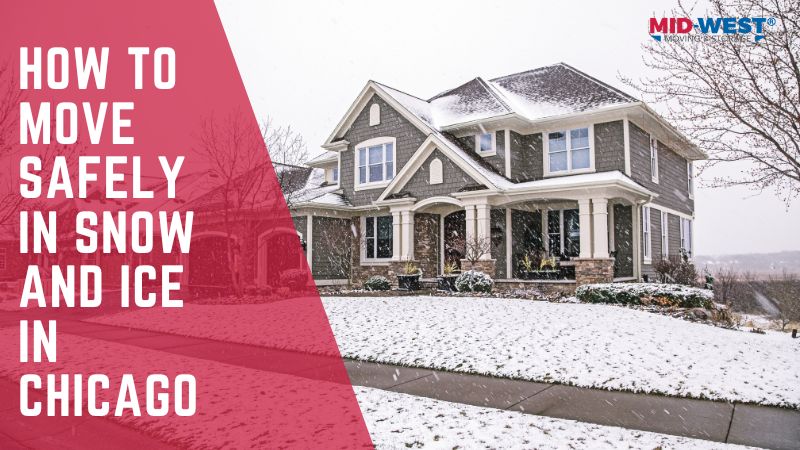
A winter move can be appealing thanks to lower costs, greater scheduling flexibility, and better availability from professional movers. But relocating during the coldest months of the year also means families and crews must contend with serious weather hazards. Here’s how to stay safe when moving in snow and ice.
Midwest winters are notoriously unforgiving, with temperatures on some days dropping below 0°F. January and February typically bring the heaviest snowfall, though storms can hit throughout the season. In the Chicagoland area, powerful winds off Lake Michigan can push wind chills to –20°F or even lower.
Ice accumulation and the near-invisible danger of black ice in the early morning or at night make walking and driving especially risky. Repeated freeze–thaw cycles also take a toll on roads, sidewalks, and surrounding infrastructure. Because of these winter obstacles, moving in snowy or icy conditions presents significant challenges and safety concerns for Chicago residents.
For homeowners weighing cost and convenience, winter can still be an attractive option. If you are comparing timing and pricing, our guide on Winter vs. Summer Moves: Are You Getting Better Moving Deals in the Cold? explains how seasonal demand affects availability and moving costs.
Quick Winter Moving Safety Checklist
Before diving into details, here is a quick checklist to reduce risk on moving day:
- Clear and shovel all walkways, driveways, and steps
- Apply salt or ice melt shortly before movers arrive
- Wear waterproof, non-slip boots and insulated gloves
- Use the “Penguin Walk” on icy surfaces
- Protect floors with runners, mats, or cardboard
- Wrap furniture to guard against snow and moisture
- Delay the move during ice storms or travel advisories
Why Moving in Snow and Ice Is Risky in Chicago
Relocating in winter requires extra awareness because many dangers are not immediately visible. Chicago’s cold season is not only frigid but unpredictable, with conditions that can change quickly and turn a routine move into a hazardous situation.
Slip-and-fall injuries are among the most common risks. Icy driveways, front steps, and sidewalks can become slick after overnight freezes. Even areas that appear clear may conceal black ice, which frequently forms in shaded spots and along north-facing walkways.
Snowbanks and drifting can narrow access points, forcing movers to navigate tight pathways while carrying heavy or bulky items. This increases the likelihood of missteps, muscle strains, or dropped belongings.
Moisture presents another challenge. Snow tracked indoors melts quickly, creating slick floors and potential water damage to hardwood, carpeting, and furniture. Without proper precautions, winter moves can result in costly repairs at both the old and new home.
Extreme cold also affects the body. Low temperatures stiffen muscles, reduce grip strength, and slow reaction time, increasing the risk of accidents. Shorter daylight hours further reduce visibility, adding another layer of risk.
Safe Walking Techniques on Snow and Ice
Midwesterners often rely on the “Penguin Walk,” an awkward but effective method for safely navigating icy surfaces. Lean slightly forward to keep your center of gravity over your feet. Take short, shuffling steps instead of long strides, and keep your feet flat to maximize traction.
Avoid sudden movements and sharp turns. Keep your hands free and out of your pockets to help maintain balance. While your arms can help stabilize you, avoid using outstretched hands to break a fall.
When carrying belongings, stick to smaller items or leave heavy lifting to professional movers. Stay alert for hidden ice, especially black ice, which often appears wet or glossy and commonly forms near garage entrances, downspouts, shaded driveways, and north-facing sidewalks.
If temperatures are below freezing and pavement looks wet, assume black ice is present. Move slowly, stay focused, and avoid distractions such as phones. Communicate clearly with movers before stepping outside, and never rush, even in extreme cold.
Preparing Your Home Before Moving Day
The safest winter moves begin well before the truck arrives. Preparing your property reduces the risk of injuries, delays, and damage.
Start by thoroughly shoveling driveways, walkways, front steps, and sidewalks movers will use. Create wide, stable paths so crews have room to maneuver large items safely.
Once snow is removed, apply salt or ice melt to prevent refreezing. Time this shortly before movers arrive to maintain traction throughout loading and unloading.
Do not overlook smaller details. Brush snow from railings, handholds, and entryways to ensure secure points of contact when navigating stairs or ramps.
Inside the home, protect floors from moisture and slipping hazards. Lay down runners, mats, or flattened cardboard along high-traffic areas. Keep towels nearby to quickly dry melting snow and prevent puddles.
Clear, prepared pathways are one of the most important factors in preventing winter moving injuries and property damage.
What to Wear When Moving in Snow and Ice
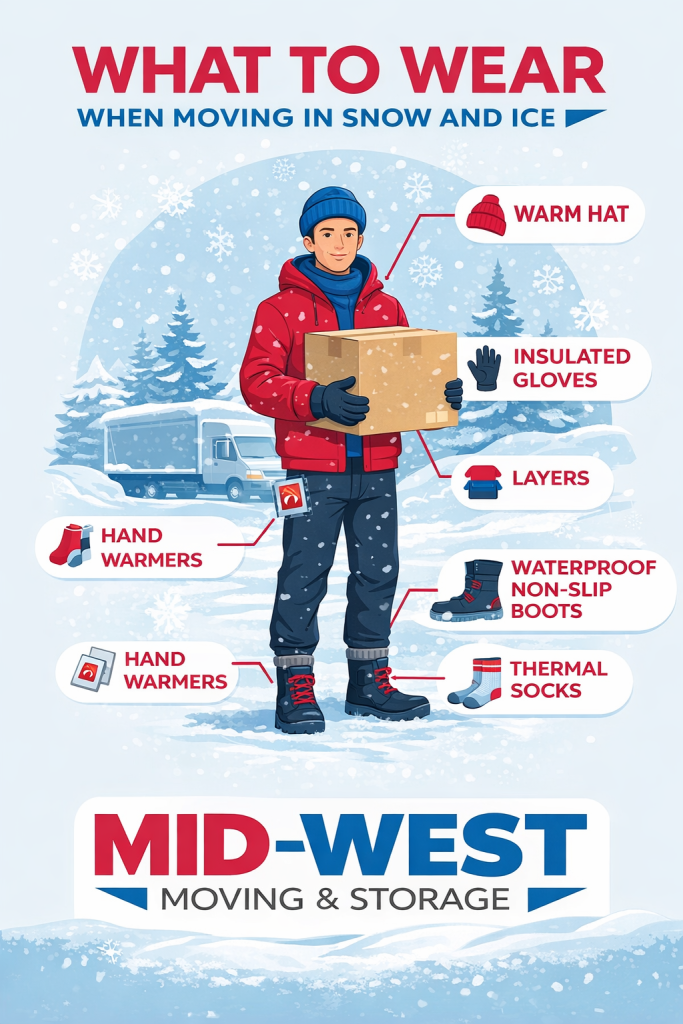
Professional movers dress for winter conditions, and homeowners should do the same. Wear waterproof, non-slip boots with thermal socks, and avoid cotton materials that retain moisture. Choose insulated gloves with good grip and wear a warm hat. Hand warmers can be helpful during extreme cold.
Layering is essential. It allows you to regulate body temperature while maintaining flexibility and mobility needed for lifting and navigating icy surfaces.
How Professional Movers Adapt for Winter Moves
Winter moves demand experience, preparation, and careful planning. Professional movers use trucks equipped for cold weather, including winter-rated tires designed for snow and ice. They travel at reduced speeds, allow for longer braking distances, and map routes with current weather conditions in mind.
Additional precautions are taken to protect both the home and the belongings inside it. Movers add padding, shrink wrap, and plastic coverings to shield items from moisture and temperature changes. Doorway and floor protection systems are installed to help prevent slips and to avoid tracking snow and water indoors.
Protecting Furniture and Belongings from Snow and Moisture
Winter moisture can cause wood to warp, encourage mold growth on upholstery, and corrode sensitive electronics. To prevent damage, wrap furniture in shrink film, use protective covers for upholstered pieces, and place mattresses in sealed bags.
For more detailed guidance on preventing damage during a move, review our complete guide on how to protect your furniture during a move.
Tape boxes securely and consider plastic bins for items that are particularly vulnerable to damp conditions. Once everything has arrived, give furniture and electronics time to acclimate to indoor temperatures before unpacking or powering them on.
Moving Truck & Winter Driving Safety
Professional movers are trained to navigate Midwest winter roads safely, including allowing greater stopping distances on snow- and ice-covered surfaces. When possible, avoid scheduling moves in the early morning or late evening, when black ice is most likely to form and visibility is reduced. It’s also important to factor in city winter parking bans, changing street conditions, and snow-related parking restrictions that could affect truck access.
When You Should Delay a Winter Move
Chicago’s notorious winters can force moving plans to change, particularly when ice storms, whiteout conditions, or extreme wind chills are in the forecast. Travel advisories or emergency warnings are also clear signals that postponing the move may be the safest choice. Reputable professional movers prioritize safety over speed, especially in the heart of winter.
Moving With Kids, Seniors and Pets in Winter
Children, seniors, and pets require extra attention during a winter move. Keep vulnerable family members and animals in a warm, secure space—such as a designated “safe room”—to limit their exposure to the bitter cold and the constant traffic in and out of the home. If needed, arrange alternate transportation so they can remain comfortable while the move is underway. Be especially mindful of slip hazards and the risk of hypothermia for older adults.
Ensure a Smooth Winter Move with Mid-West Moving & Storage
Moving to a new home is stressful and relocating at the height of a severe Chicago winter is even more challenging. Take the load off by using Mid-West Moving & Storage. As an experienced residential local moving service, we know how to navigate winter conditions to keep your items safe. Included in our comprehensive professional moving services are relocation planning and management. We factor in winter weather conditions to determine logistics, routes, and other critical details. Trained movers arrive on time, handle all belongings with care, and take steps to protect your home.
Crews are available to pack, unpack, assemble, and install items. We offer conveniences, like short- and long-term storage options in our secure facilities. All moving supplies are provided. Plus, our movers are licensed, insured, and background-checked to give you extra peace of mind.
When a winter move is on the horizon, choose Mid-West Moving & Storage. As an award-winning mover with decades of experience relocating homeowners during Chicagoland winters, we’ll do the same for you. Call our Elk Grove Village or Chicago, Illinois, office today for a free quote.
Winter Moving FAQs
Is it safe to move during snow?
Moving during snow can be safe with proper preparation and precautions.
Clearing walkways, using salt or ice melt, protecting floors and furniture,
and working with experienced movers all reduce risks. However, heavy snowstorms
or blizzard conditions can make moving unsafe, so it’s important to monitor
weather forecasts and adjust plans as needed.
Do movers cancel moves because of ice?
Yes, professional movers may cancel or reschedule moves if ice creates
hazardous road or walkway conditions. Safety is a top priority, and many
companies will not risk transporting furniture or navigating slippery
surfaces when black ice or freezing rain is present.
How cold is too cold to move furniture?
While there’s no strict temperature cutoff, extreme cold, especially below
0°F or with severe wind chill, can make lifting and carrying furniture
dangerous and increase the risk of slips, frostbite, or equipment failure.
In such conditions, it’s wise to postpone the move or ensure professional
movers are fully equipped for winter hazards.
Does snow damage furniture during a move?
Snow and winter moisture can damage furniture if proper protection isn’t used.
Wood can warp, upholstery can develop mold, and electronics can corrode.
Wrapping items in shrink film, using plastic covers, and ensuring boxes are
sealed or stored in waterproof bins helps prevent damage.
Are winter moves cheaper in Chicago?
Yes, winter moves are often less expensive because demand for movers is lower
during the cold months. Additionally, moving companies may offer discounts or
more flexible scheduling. However, the potential need for additional safety
measures and weather-related delays should be factored into planning.

Director of Marketing & Development
Kari-Ann Ryan is a dynamic marketing strategist with a proven track record in brand development, corporate visibility, and business growth. As the Director of Marketing & Development for Mid-West Moving & Storage and Chicago Office Movers, she leads all branding, marketing, and business development initiatives, driving awareness and engagement across multiple industries.
With extensive experience in multi-brand marketing, nonprofit fundraising, event planning, and retail management, Kari-Ann brings a comprehensive and results-driven approach to her role. She is a dedicated leader in the business community, actively involved in the Schaumburg Business Association and the GOA Regional Business Association. She also serves as a Board Member for the Alzheimer’s Association Illinois Chapter, reinforcing her commitment to advocacy and philanthropy.
In addition to her corporate role, Kari-Ann is the founder of LMJ’s Lost Souls – Alzheimer’s Fund, a nonprofit organization dedicated to awareness, education, and fundraising for Alzheimer’s research and support.
She holds a Bachelor of Business Administration in Marketing from Western Michigan University and is Certified in Constant Contact Email Marketing, with expertise in social media strategy and digital engagement.