Last Updated on October 20, 2026 by Kari-Ann Ryan
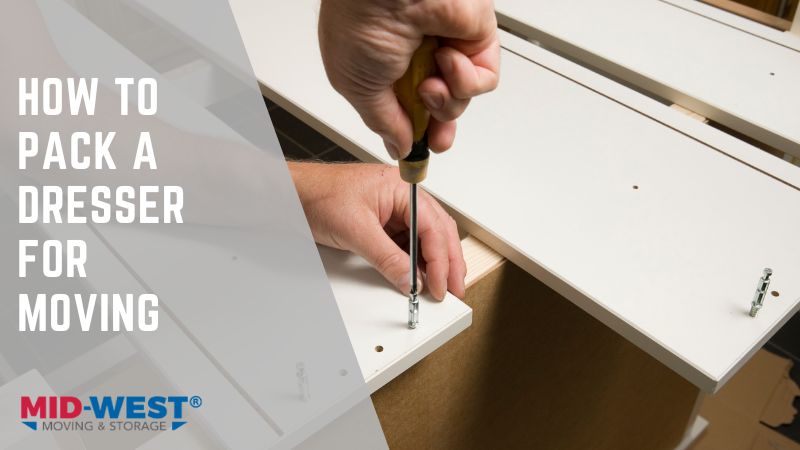
Packing a dresser for a move is more than emptying the drawers and wrapping the furniture in a blanket. You need to decide what stays in the drawers, whether the drawers should come out, how to protect the finish and hardware, and how you will get the dresser safely from the bedroom to the moving truck.
The right approach depends on the dresser itself. A lightweight six-drawer piece from a big-box store can be handled differently than a solid-oak antique with dovetailed drawers. Your moving route matters, too. A dresser that fits easily through a suburban hallway may be much harder to maneuver down a Chicago walk-up or around a tight condo elevator.
Since 1983, Mid-West Moving & Storage has moved dressers and other heavy furniture out of homes across Chicago and the surrounding suburbs. Here is how to prepare a dresser for moving, protect it along the way, and avoid the common mistakes that can turn a straightforward move into a damaged piece of furniture or an injured mover.
Quick Answer: How Do You Pack a Dresser for Moving?
To pack a dresser for moving, remove heavy and fragile items from the drawers, then take out the drawers if necessary to reduce weight. Cover the dresser with moving blankets, add extra padding around corners and handles, and secure everything with stretch wrap. Never apply tape directly to finished wood. If the dresser has a mirror, detach and pack it separately when possible. Use a furniture dolly and enough helpers to move the dresser safely.
What Supplies Do You Need to Pack a Dresser for Moving?
Gather everything before you start so you are not hunting for tape with a half-wrapped dresser in the middle of the room.
| Supply | What It Does |
|---|---|
| Moving blankets or furniture pads | Cushion the dresser against bumps, dents, and scratches. |
| Stretch wrap (furniture wrap) | Holds blankets and padding in place and keeps drawers from sliding. |
| Painter’s tape | Labels wrapped pieces or secures paper where safe. Never apply directly to finished wood. |
| Packing paper | Wraps knobs, small hardware, and delicate surfaces. |
| Cardboard corner protectors | Protect the edges and corners most likely to get bumped. |
| Small zip-top bags | Keep screws, brackets, and mirror hardware together. |
| Labels or markers | Identify drawer positions and label hardware bags. |
| Furniture sliders | Help move the dresser short distances without scraping floors. |
| Furniture dolly | Carries the dresser’s weight over longer distances. |
| Moving straps | Help distribute the load across lifters’ shoulders or forearms. |
| Work gloves | Improve grip and protect hands while lifting. |
An important distinction to make is that moving blankets protect the dresser, while stretch wrap keeps the blankets in place. Stretch wrap is not padding. If you wrap a dresser in plastic without first covering it with moving blankets, the finish is still vulnerable to door frames, stair rails, walls, and other hard surfaces along the way.
How to Pack and Wrap a Dresser for Moving: Step by Step
Start by emptying the dresser and deciding whether the drawers should stay in place or be removed. Then cover the entire piece with moving blankets and secure the padding with stretch wrap. The steps below walk you through the process from start to finish.
- Empty the dresser: Take out anything heavy, fragile, sharp or loose. Jewelry, perfume bottles, books, and chargers rattling around in a drawer can crack glass or gouge wood.
- Remove the drawers when it makes sense: Pulling the drawers takes a lot of weight off a solid wood dresser and makes it easier to grip and tilt. If a drawer sticks or uses a locking slide you don’t understand, leave it in.
- Protect the drawers: Removed drawers get wrapped on their own, with a blanket or packing paper over the fronts. Drawers left in place get held shut with stretch wrap around the outside of the blankets.
- Cover the dresser: Drape moving blankets over the top, front, back and sides until no wood is showing.
- Protect the corners: Add cardboard corner protectors or an extra fold of blanket on every corner and edge. Corners hit door frames first.
- Secure the padding: Run stretch wrap around the blankets, top to bottom, until they don’t shift. Keep tape and adhesive off finished wood, since it can pull up stain, lacquer, or paint.
- Deal with handles and hardware: Remove knobs that unscrew easily and bag them. Fixed pulls get a layer of packing paper or extra blanket, so they don’t scratch the furniture loaded next to them.
- Check the bottom: Make sure the base and any legs are padded before the dresser goes onto a dolly or the truck floor.
Should You Empty Dresser Drawers Before Moving?
Yes, at least partly. Always remove heavy, fragile, valuable, glass, book, shoes, and other dense or loose items that could shift during the move. They add unnecessary weight and can damage the dresser or other belongings in transit.
| Situation | Recommended Approach |
|---|---|
| Heavy solid wood dresser | Consider removing the drawers to reduce the weight. |
| Dresser is hard to lift | Remove the drawers if possible to make lifting and carrying easier. |
| Narrow stairs or tight turns | Removing the drawers can make the dresser easier to maneuver through tight spaces. |
| Lightweight dresser | The drawers may stay in place if they are secured and the dresser can be moved safely. |
| Drawers are hard to remove | Do not force them. Secure the drawers and protect the dresser during the move. |
| Drawers are removed | Wrap and protect each drawer separately with moving blankets or suitable packing materials. |
How Do You Pack Dresser Drawers for Moving?
Drawers can make a dresser heavier and harder to carry, so pack them with the move in mind. Follow these steps:
- Remove heavy and fragile items: Take out anything that adds significant weight or could break during handling.
- Avoid overfilling: If your mover allows lightweight clothing to remain in the drawers, keep it folded flat and leave enough room so the drawer is not excessively heavy.
- Remove the drawers when appropriate: If the dresser is easier or safer to move with the drawers out, take them out before wrapping the piece.
- Wrap each drawer: Use moving blankets or packing paper to protect the drawer and its finish.
- Stack carefully: If you need to stack removed drawers, place them face to face so the finished fronts do not rub against each other.
- Secure loose hardware: Put knobs, screws, brackets, and other removable hardware in a labeled bag and keep it with the dresser.
Label each drawer: Mark each one by its original position, such as top left, middle, or bottom, so you can quickly put everything back where it belongs
What Type of Plastic Wrap Should You Use for Moving Furniture?
The plastic roll you want is stretch wrap, also called furniture wrap or plastic stretch film. It clings to itself without adhesive, making it ideal for securing furniture padding. Use it to hold moving blankets in place, keep drawers and doors closed, bundle loose padding, and protect surfaces from dust during transport.
- Moving blankets provide the actual cushioning. They absorb bumps and help prevent scratches, dents, and scuffs.
- Plastic sheeting, such as the drop cloths sold at hardware stores, serves a different purpose. It can protect a mattress or keep dust off items in storage, but it does not cling tightly or provide the tension needed to secure furniture blankets.
The rule of thumb is to use plastic wrap with padding, not instead of padding. Avoid leaving plastic pressed directly against finished wood for extended periods, too. If moisture becomes trapped underneath, especially inside a hot moving truck or humid storage unit, it can cause some finishes to cloud, soften, or otherwise react.
What Is the Easiest Way to Move a Heavy Dresser?
The easiest way to move a dresser is to make it lighter and the path shorter by emptying the heavy contents, pulling the drawers if appropriate, clearing and measuring the route, and rolling it on a furniture dolly instead of carrying it. What counts as easy still depends on the dresser’s weight, how it’s built, and how many turns sit between the bedroom and the truck.
A few rules apply to every dresser. Keep it upright when you can, never lift it by the drawer handles, which can pull loose or rip the drawer front, and don’t drag it, wrapped or not.
How to Move a Heavy Dresser Without Injury or Damage
Weight and route matter more than headcount. Two people can handle a light dresser down a straight hallway, but a solid wood piece going around a tight landing may need three or four, plus equipment.
- Don’t go it alone on anything heavy. Back injuries on moving day are common and avoidable.
- Use a dolly strapped securely to the dresser for any distance longer than a few feet.
- Lift with your legs, keep the load close to your body, and avoid twisting.
- Use moving straps correctly, adjusted so the weight sits low and both lifters carry evenly.
- Protect floors and walls along the route and watch corners and door frames.
- Talk to each other. Agree on who calls the lift, the turns and the set-down.
How Do You Move a Dresser Down Stairs Safely?
Before moving a dresser down a staircase, plan the route and make sure the furniture can be handled safely. Follow these steps:
- Measure first: Check the staircase, landings, doorways, and tight turns to make sure the dresser will fit.
- Remove the drawers: Taking them out reduces weight and makes the dresser easier to control.
- Clear the stairs: Remove rugs, boxes, shoes, and anything else that could create a tripping hazard.
- Protect the surroundings: Pad walls, banisters, and railings that could come into contact with the dresser.
- Position your strongest mover at the lower end: Have another person guide from the upper end and communicate each movement clearly.
- Move one step at a time: Keep the dresser controlled throughout the descent and never slide it down the stairs.
- Stop if the route becomes unsafe: If the dresser is extremely heavy, the staircase is steep or narrow, or there is a difficult turn at the landing, professional movers are the safer choice.
A dropped dresser can cause serious injuries on a staircase. If the team cannot control the weight at every step, do not risk trying to muscle it down.
How to Move a Dresser Through Narrow Doorways and Hallways
A few minutes with a tape measure can save you from getting a dresser wedged halfway through a doorway. Before anyone lifts, measure the dresser and the entire route it will take.
- Measure the dresser: Record its height, width, and depth, including any protruding handles or trim.
- Measure the route: Check doorways, hallways, stairwells, landings, and other tight spots between the dresser and the moving truck.
- Account for the actual opening: Door trim, stops, hinges, and other hardware can reduce the usable width.
- Remove the drawers if needed: Taking them out can reduce the dresser’s weight and give you more room to maneuver it.
- Remove the door if necessary: If the fit is close, taking the door off its hinges can provide the extra clearance you need.
- Plan the angle: A dresser that will not fit straight through a doorway may clear it when tilted onto its side or back. Work out the angle before anyone starts lifting.
How to Protect a Dresser from Scratches and Damage During Moving
The goal is to cover every surface that could come into contact with such as a wall, door frame, another piece of furniture, or the truck. Pay particular attention to the areas most likely to get bumped or rubbed during the move.
- Cover the top completely: Use a full moving blanket to protect the largest and most visible surface.
- Pad the corners and edges: Add extra blanket padding or cardboard protectors to corners, legs, and the bottom edge, where impacts are most likely.
- Protect drawer fronts and handles: Put a layer of padding between them and anything that could rub against them during transport.
- Handle glass separately: Remove glass inserts and mirrors when possible and pack them separately rather than leaving them attached to the dresser.
- Secure the padding: Once the dresser is covered, use stretch wrap to hold the blankets in place so they cannot slide off and leave an exposed corner.
How to Move a Dresser Without Scratching Hardwood Floors
The safest rule is simple: lift or roll a dresser, never drag it across the floor. Even a small piece can leave scratches, dents, or scuffs if its feet catch the surface or debris gets trapped underneath.
- Use furniture sliders for short moves: Felt or plastic sliders can help move a dresser across a room without dragging its feet directly on the floor.
- Use a dolly for longer moves: A properly sized furniture dolly keeps the dresser off the floor and makes it easier to control.
- Protect hardwood floors: Lay down floor runners, cardboard, or another suitable protective covering along the route.
- Watch tile floors: Tile can crack or chip if a heavy dresser corner is dropped onto it, so keep the load controlled throughout the move.
- Take extra care on carpet: Use sliders designed for carpet and watch for tack strips around doorways.
- Check your equipment first: Inspect dolly wheels and furniture sliders for dirt, gravel, or other debris that could get trapped underneath and scratch the floor.
How to Pack and Move a Dresser with a Mirror
A dresser mirror should be treated as a separate fragile item whenever possible. Protect the glass independently from the dresser so a bump to the furniture does not put the mirror at risk.
- Check how the mirror is attached: Many dresser mirrors are secured with bolts or brackets on the back. Remove the hardware only if the mirror can be safely detached.
- Label the hardware: Put the screws, bolts, and brackets in a labeled bag, then secure the bag to the wrapped back of the dresser so it stays with the furniture.
- Wrap the mirror separately: Cover the glass with packing paper, then protect the corners and edges with cardboard.
- Add a moving blanket: Wrap the entire mirror in a moving blanket and secure the padding so it cannot shift.
- Transport it on edge: Keep the mirror standing upright during transport rather than laying it flat.
- Keep heavy items away: Do not lean furniture, boxes, or other heavy objects against the glass.
- Use a crate for special pieces: Oversized, unusually fragile, or antique mirrors may warrant a custom wooden crate for additional protection.
Even when the dresser is protected perfectly, the glass can still break from impact or pressure. Treat the mirror as its own fragile load from removal through delivery.
What Are the Most Common Mistakes When Moving a Dresser?
Most dresser damage we see comes from a short list of avoidable mistakes:
- Leaving books, shoes or other heavy items in the drawers
- Trying to move a heavy dresser alone
- Carrying it by the drawer handles
- Dragging it across the floor
- Putting tape directly on finished wood
- Forgetting to secure drawers that stay in
- Using plastic wrap without padding underneath
- Forcing out drawers that don’t want to come out
- Leaving the mirror attached
- Losing the screws and mirror hardware
- Not measuring doorways, hallways and stairs
- Finding out on moving day that the dresser won’t fit
When Should You Hire Professional Movers to Move a Dresser?
Consider hiring professional movers when:
- The dresser is made of heavy solid wood.
- The furniture is antique, valuable, or easily damaged.
- The dresser is oversized or has an attached mirror.
- The move involves steep staircases or narrow landings.
- You’re moving into or out of a high-rise with elevator restrictions.
- The dresser needs to be transported a long distance.
- You cannot safely manage its weight with the help and equipment available.
You also don’t need to be moving an entire house to benefit from professional assistance. Mid-West Moving & Storage handles small moves involving individual pieces of furniture, making it possible to get help with a heavy dresser or other bulky belongings.
Professional Furniture Packing and Moving in Chicago and the Suburbs
Mid-West Moving & Storage has served Chicago and the surrounding suburbs since 1983, helping homeowners and businesses transport everything from everyday household furniture to delicate and oversized items.
Our professional packing services include preparing and protecting furniture for transport. For antiques, mirrors, and other fragile items requiring additional protection, specialized crating services are also available.
Whether you’re moving from a Chicago apartment, a Schaumburg home, or another community in the northwest suburbs, our team can help you prepare your furniture for a safer, more organized move.
Need help moving a heavy dresser or packing furniture? Contact Mid-West Moving & Storage at 847.593.7201 or request a free moving estimate to discuss your upcoming move.

Dresser Moving Checklist: Before, During, and After Your Move
Before Moving
- Empty heavy and fragile items
- Photograph the dresser
- Remove drawers if appropriate
- Remove mirror if appropriate
- Measure doorways, hallways and stairs
- Gather moving equipment
Wrapping
- Protect corners
- Wrap with moving blankets
- Secure blankets with stretch wrap
- Protect handles
- Secure drawers
Moving
- Clear the route
- Protect flooring
- Use proper equipment
- Use enough people
- Don’t lift by handles
- Don’t drag furniture
After Delivery
- Inspect for damage
- Reinstall drawers
- Reattach mirror
- Reinstall hardware
- Check that every drawer opens and closes smoothly
Packing and Moving a Dresser FAQs
Can you leave clothes in dresser drawers when moving?
Sometimes. Lightweight, folded clothing can often stay in a sturdy dresser if the drawers are secured with stretch wrap over padding. Heavy items like jeans stacked deep, shoes, or books should come out. Policies differ between moving companies, and some prefer drawers emptied or removed, so confirm with your mover before packing day.
How do you secure dresser drawers for moving?
Cover the dresser in moving blankets first, then run stretch wrap around the outside so it holds the drawers closed through the padding. Don’t tape drawers shut directly on finished wood, since adhesive can lift the finish. If the drawers are removed instead, wrap each one separately and label its position.
Are moving blankets or plastic wrap better for a dresser?
You need both, because they do different jobs. Moving blankets cushion the dresser against dents and scratches. Stretch wrap holds the blankets in place and keeps drawers shut. Plastic wrap alone offers almost no impact protection, and trapped moisture under plastic can damage some wood finishes during a long move or storage.
Can you move a dresser by yourself?
Only if it’s small and light. You can empty it, pull the drawers, and slide it across a room on furniture sliders alone. Carrying a full-size or solid wood dresser by yourself, especially on stairs, risks injury and damage. For anything heavy, get at least one helper, a dolly, and straps, or hire movers.
How do you move an antique dresser without damaging it?
Go slower and pad more than you would with a modern piece. Photograph it first, remove drawers and the mirror if they come out easily, and never force old joinery. Wrap it fully in blankets with extra corner protection and keep plastic off the original finish. Valuable antiques are often worth professional packing or custom crating.
How do you prepare a dresser for professional movers?
Empty valuables, fragile items, and anything heavy from the drawers. Ask your mover whether lightweight clothes can stay in. Remove small items from the top, bag any loose hardware, and tell the crew if the dresser is antique or has a detachable mirror. Professional movers typically handle the padding and wrapping themselves.

Senior Move Consultant | Mid-West Moving & Storage
Michael Tae is a Senior Move Consultant at Mid-West Moving & Storage, bringing over 20 years of experience in the moving industry, specializing in residential and commercial moving solutions. Since joining Mid-West Moving & Storage in 2019, Michael has helped countless clients navigate their moves with confidence by providing expert guidance, personalized planning, and a customer-first approach.
As a leader of the inside sales team, Michael works closely with homeowners, businesses, and families to ensure every move is organized, efficient, and stress-free. His calm communication style and industry knowledge help clients make informed decisions throughout the moving process.
A lifelong Chicago native, Michael understands the unique needs of individuals and businesses moving throughout the Chicagoland area. Outside of work, he enjoys spending time with his wife and two children.
Michael shares his moving expertise through Mid-West Moving & Storage’s blog, providing helpful insights on residential moving, commercial relocations, senior moves, packing tips, and planning a successful move.