
Last Updated on November 11, 2026 by Kari-Ann Ryan
Yes, people move in the winter more often than you might think. In fact, winter is considered the off-season for moving companies, generally running from October through April. During this time, there may be more scheduling flexibility, greater availability, and potentially lower moving rates. The biggest challenge is the weather, especially in Chicago, where snow, ice, and freezing temperatures can complicate moving day.
Here’s a closer look at why people move during the winter, the advantages and drawbacks to consider, and how our crews help keep your move on track even in cold conditions.
Why People Move in Winter
There are many reasons why a person would move in the winter. Typically a job change, the closing of a home, a lease expiration or other family situation will dictate when a person moves.
Summer remains the busiest moving season with 40-45% of all annual moves occurring between May and August. Yet, even within this very busy time of the year, the remaining months comprise 11% of all moves in November and December alone. Many other people move in the months subsequent to summer.
- A new job: An employer sets the date that an employee will begin work. Many of these dates are in January when a company’s budget for the year is reset. Although the weather outside may be cold and dreary, the employee and their family must be at the new work location by the start date, ready to tackle their jobs.
- A home closing: A house that goes under contract in October or November closes in December or January. Sellers want out, buyers want in, and nobody is going to carry two mortgages until May to wait for nicer weather.
- Renter no longer under lease obligation: Many rentals have end dates at the end of every month. Whether you’ve lived in your current apartment for a few years or a short period of time, the end date of your lease is your “moving day”. We move many families with January 31st end of lease dates for example.
- The new year: It is common for many people to act on decisions that they made over the holiday period. This includes people looking to downsize their homes, or moving to be closer to relatives. People also look to move to combine two households together, or to move out of an apartment that they find to be too small.
- The school calendar: The typical time of year for a move with children is summer, but many families are able to plan their move around winter break and have their children register for school in their new location.
None of these situations are unusual. We move families through every one of them, every winter.
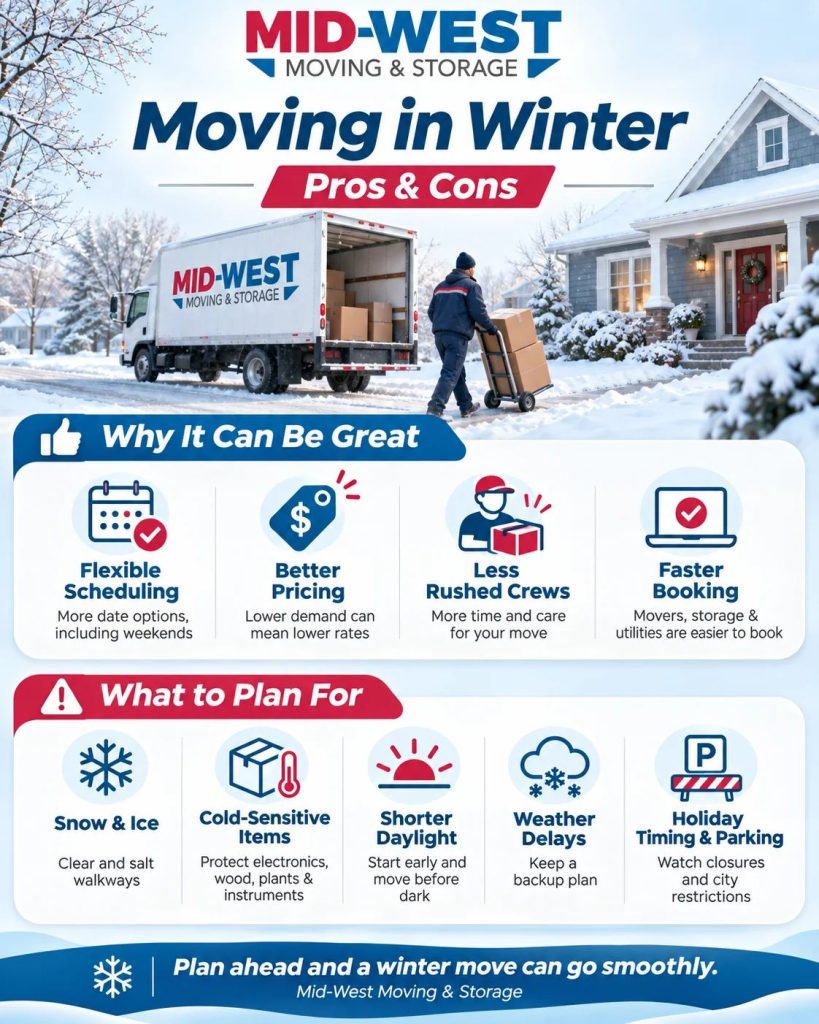
The Pros/Benefits of Moving in Winter
Winter also allows for the same equipment and staff to be utilized during the off-peak season at lower demand rates. The supply of moving companies with trucks, equipment, and staff is the same whether it is summer or winter but the demand for their services is lower in the winter months.
More Flexible Scheduling, Including Weekends
In June, a Saturday at the end of the month can be booked weeks out. In January or February, that same Saturday is often open. You get to pick the date that fits your closing, your lease, or your time off work, instead of taking whatever is left. If your plans shift by a day or two, rebooking is easier as well.
Lower Demand and Often Better Pricing
Since moving rates are determined based upon the demand for moving services, an off-season move would typically cost less than the same exact move taking place during the peak season months.
Given that each move is determined based upon specific variables including distance, amount of items to be moved, amount of stairs and amount of packing required, winter months typically allow for better pricing for moves occurring mid-week and mid-month.
Crews That Aren’t Rushing from Job to Job
Peak season means tight schedules. A crew might finish one house and head straight to the next. In winter the calendar has room in it, so the crew assigned to your move can take the time your move needs. That matters more when there’s snow on the ground which requires careful movements.
Faster Booking for Movers, Storage, and Utilities
It isn’t only movers who slow down. Storage space is easier to reserve, and internet installers, utility companies, and cleaning services tend to have shorter waits too. Condo and apartment buildings have fewer residents competing for the freight elevator and loading dock. A move that takes six weeks of lead time in summer can come together much faster in winter.
Check out our blog 7 Benefits of Moving in the Winter for more.
The Downsides/Cons of Moving in Winter
Winter moves come with a few challenges, particularly in Chicago, where snow, ice, and freezing temperatures can complicate the day. Knowing what to expect ahead of time helps you prepare and avoid surprises once the moving truck arrives.
Snow, Ice, and Freezing Temperatures
The worst part of a winter move are the slick surfaces of driveways, sidewalks, and stairs. The paths that you would normally walk on in warm weather will be slippery and require extra care.
When the movers arrive at your old house make sure to have the sidewalks and steps cleared of any snow and salted to prevent any slipping. And don’t forget to do the same at your new house before unloading your belongings.
Also be aware that cold weather can be very damaging to some of your belongings. This includes items such as:
- Electronics
- Musical instruments
- Wood items (especially antique)
- Plants
Make sure that these items are protected from the cold in order to prevent any damage.
Shorter Daylight
During the late winter months of December, January, and February, Chicago receives only about 9 hours of daylight.
While a move that occurs during the summer months may be able to be completed by end of day, a move that occurs during the winter can extend past sunset. It is especially important to begin a winter move early to complete the move prior to dusk, when a couch can be very heavy down icy stairs.
Possible Weather Delays
Of course, many days in Chicago during winter have perfect moving weather, but occasional heavy snowfall, ice storms or even extremely cold temperatures can significantly affect a moving project.
That is why it’s always better to build some flexibility in your moving plan:
- A backup moving date
- 2 days of overlap between homes
- Flexible travel plans for family members and etc.
Holiday-Season Timing
Late November, December, and early January are some of the most challenging times to move in Chicago.
Most offices of building management, title companies, and utilities are closed for short periods of time during the holidays. Additionally, friends and family who promised to assist with the move are typically away for the holidays as well.
Pack the kitchen while trying to host dinner for family and friends is not ideal. It is recommended to move in early December or in January.
Additionally, within the city of Chicago there are winter parking restrictions. From December 1st to April 1st, there is no overnight parking on major streets and you must check with the city to see if your street is a “snow route” and what the specific restrictions are.
Keep in mind that when you are moving within the city you will need to find a legal parking space for your moving truck on the street in front of your new home.
However, with some planning and forethought, your winter move can be a great success.
Read our Winter Moving Tips for some ideas on what to pack in an emergency kit, why you should make sure the heat is on at your new home before you arrive, and more.
How Mid-West Moving Handles Winter Moves
At Mid-West Moving & Storage, we have over 40 years of experience in completing local and long-distance moves. We can help manage the stress of your winter move, and have completed over 2,500 moves annually.
So, whether you are a first time mover or just need someone to manage the details for you, we can help.
- Floor protection: We cover your floors with floor covering and place protective pads on step areas, such as stairways and railings, to prevent damage from snow, slush and salt tracking into your home.
- Covering and padding your items: Your belonging(s) will be properly protected with floor coverings as well as padding and/or wrapping of items such as furniture. In addition, our experienced packing services can safely pack and move your boxed items as well (e.g. clothing, dishes, kitchenware, etc.).
- Versatility with short- and long-term Storage: In excess of 60,000 square feet of highly-secured, alarmed, Climate-Controlled storage space is available for short- and long-term storage, as closing dates may not align with move-in dates – or the weather might intervene to prevent your timely move-in.
- The same movers that you can trust to treat your home with respect will also pack your belonging(s) while they are there.
- A Free Quote: We offer the option of a free in-home estimate, a live video survey of your home conducted via smart phone or other device or a DIY video survey of your home that you conduct and we review. For many people the video survey option works well in January.
- Someone Monitoring the Weather for You: We make sure someone is always aware of the weather. If it starts to look like it may impact your move, we will be in contact to inform you of any changes.
All our movers are experienced in moving into condos and high-rises. In fact, we can even set up an elevator reservation for you, saving you the hassle of having to make another phone call over the holidays.
Need to schedule a move for this winter? Call us at 847.593.7201 or fill out our free moving quote form to reserve winter moving dates.
FAQs Related to Winter Moving
What Is the Cheapest Month to Move?
January is generally the least expensive time for movers as it is after the peak moving season of fall and demand for movers has decreased. Rates will vary from mover to mover and even from move to move but generally speaking, the middle of the month on a Wednesday is the least expensive.
Is It Harder to Move in the Snow?
Yes, it takes a little more planning but really no different than any other move. We take our time on the stairs and be careful on the ramps. We need cleared walkways for our trucks and need you to make sure that floors in your home are covered to protect them from dirt and grime that we might track in.
Do Movers Work in Bad Weather?
Moving companies are built to handle all types of weather, even below-freezing temperatures. Yes, there can be times when you may have to reschedule because of severe weather such as a heavy snowstorm, an ice storm, or a closure of the roads. But you will be contacted by your mover ahead of time to let you know of any change.
What Is the Busiest Moving Season?
May through and including September is the peak season for moves with approximately 40% of all relocations taking place in June, July and August. End of month, begin of month and weekends in general are the most popular dates and fill up very quickly.
How to Protect Your Stuff in the Cold?
The best way to protect your furniture from cold weather is to wrap it in moving blankets or additional padding. This is especially true for items such as electronics, musical instruments, and fine wood furniture that could be damaged by cold weather. Also, be sure to store plants, liquids that could freeze, and other irreplaceable items in your heated car. Make sure to allow time for electronics to return to room temperature before plugging them in. Additionally, storing your belongings in climate-controlled storage during the time between your old home and your new home is highly recommended.
Get a Free Winter Moving Quote
If your winter move is due to a change in job, the closing of a home or a change in lease, you are not alone. Many people move in the winter and with lower demand for movers, you may even find that there are more dates available and you could get a better price for your move.
Mid-West Moving & Storage serves customers around the globe from our state-of-the-art facilities in Elk Grove Village and Chicago for local moves, long-distance moves and international moves.
Whether you need the entire move handled for you or simply require additional services such as packing services, we have the expertise to handle it all and store your household goods in our climate-controlled warehouse.
Call 847.593.7201 or fill out our free moving quote for winter moves today. We’ll take care of the rest and get you moved into your new home.

Senior Move Consultant | Mid-West Moving & Storage
Michael Tae is a Senior Move Consultant at Mid-West Moving & Storage, bringing over 20 years of experience in the moving industry, specializing in residential and commercial moving solutions. Since joining Mid-West Moving & Storage in 2019, Michael has helped countless clients navigate their moves with confidence by providing expert guidance, personalized planning, and a customer-first approach.
As a leader of the inside sales team, Michael works closely with homeowners, businesses, and families to ensure every move is organized, efficient, and stress-free. His calm communication style and industry knowledge help clients make informed decisions throughout the moving process.
A lifelong Chicago native, Michael understands the unique needs of individuals and businesses moving throughout the Chicagoland area. Outside of work, he enjoys spending time with his wife and two children.
Michael shares his moving expertise through Mid-West Moving & Storage’s blog, providing helpful insights on residential moving, commercial relocations, senior moves, packing tips, and planning a successful move.