
Last Updated on June 16, 2026 by Kari-Ann Ryan
Quick Answer
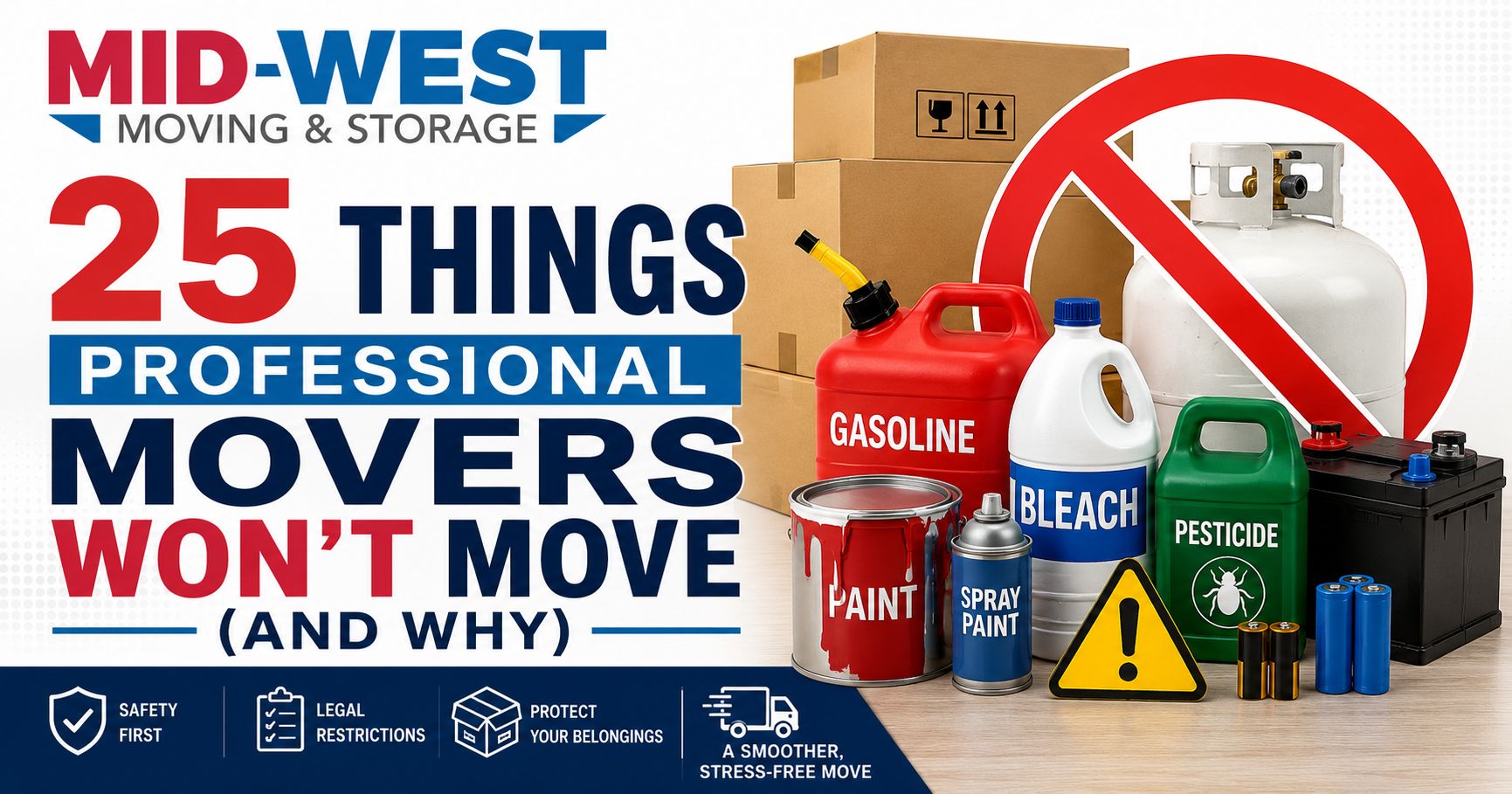
Professional movers typically will not transport hazardous materials, flammable liquids, explosives, certain batteries, perishables, live animals, or other restricted items. Common examples include gasoline, propane tanks, fireworks, paint, lithium batteries, frozen food, plants, and pets.
Understanding these restrictions before moving day can help prevent delays and ensure a safer move.
Why Professional Movers Refuse Certain Items
One of the most common misconceptions about moving is that everything inside your home can simply be loaded onto a moving truck.
In reality, professional moving companies must follow strict safety guidelines, transportation regulations, and insurance requirements. A moving truck is not just a large storage container. It is an enclosed environment where household goods travel for hours, days, or even weeks. During transit, items are exposed to temperature fluctuations, road vibrations, shifting loads, and varying weather conditions.
An item that appears harmless sitting in your garage, basement, or kitchen can become a serious hazard once it is packed inside a moving truck.
For example, a partially used can of gasoline can release flammable vapors. A damaged lithium battery can overheat and catch fire. A leaking container of bleach can ruin furniture, mattresses, clothing, and electronics belonging not only to you but potentially to other customers if shipments are consolidated.
As professional movers, we frequently encounter customers who are surprised to learn that certain belongings cannot be transported. Unfortunately, these discoveries often happen on moving day when time is limited and alternative arrangements must be made quickly.
The best way to avoid delays is to understand which items movers will not transport and why these restrictions exist.
1. Gasoline
Gasoline is one of the most commonly overlooked prohibited items during a move. Many homeowners remember to empty gas cans but forget about the fuel stored inside lawn mowers, snow blowers, generators, chainsaws, pressure washers, and other outdoor equipment.
Gasoline is highly flammable and produces vapors that can ignite under the right conditions. Even a small amount can create a significant fire hazard inside an enclosed moving truck.
What to do instead: Drain fuel-powered equipment before moving day and properly dispose of any remaining gasoline according to local regulations.
2. Propane Tanks
Propane tanks are another item movers frequently encounter during garage inspections. Whether attached to a grill, patio heater, smoker, or camping equipment, propane cylinders contain compressed flammable gas that can become dangerous if damaged or exposed to extreme temperatures.
Most professional movers prohibit transporting propane tanks regardless of their size.
What to do instead: Use the remaining propane before your move or contact a local recycling or exchange facility.
3. Fireworks
Fireworks contain explosive materials that are highly sensitive to heat, impact, and friction. Even unopened fireworks present significant safety concerns during transportation. Because of these risks, professional movers will not load fireworks onto moving trucks under any circumstances.
What to do instead: Contact local authorities or waste management facilities for proper disposal options.
4. Ammunition
Many gun owners are surprised to learn that ammunition is typically prohibited during household moves. While ammunition may be safely stored at home, transporting it commercially involves additional regulations and liability concerns. Different states may also have varying laws regarding transportation.
What to do instead: Transport ammunition separately while following all local, state, and federal regulations.
5. Gunpowder
Gunpowder presents an obvious explosion risk and is prohibited by virtually every professional moving company. Even small quantities can create dangerous conditions inside a moving vehicle.
What to do instead: Dispose of unused gunpowder according to local hazardous waste guidelines.
6. Charcoal and Charcoal Lighter Fluid
Customers often overlook grilling supplies when preparing for a move. While charcoal itself may seem harmless, charcoal dust can spread throughout a shipment, and lighter fluid is highly flammable.
What to do instead: Use or dispose of these products before moving day.
7. Kerosene
Kerosene is commonly stored for heaters, lanterns, and emergency equipment. Because it is combustible and prone to leaking, professional movers will not transport kerosene.
What to do instead: Safely dispose of or use remaining fuel before your move.
8. Paint
Paint is one of the most frequently rejected items on moving day. Both latex and oil-based paints can leak during transportation due to temperature changes and movement inside the truck. A single spilled container can permanently damage furniture, boxes, mattresses, and flooring.
What to do instead: Donate unopened paint, use it before moving, or take it to a local recycling center.
9. Paint Thinner
Paint thinner is particularly hazardous because it is both flammable and corrosive. Even a minor leak can create significant damage and safety concerns.
What to do instead:Dispose of paint thinner through an approved hazardous waste facility.
10. Aerosol Cans
Aerosol products include:
- Spray paint
- Hair spray
- Air fresheners
- Cleaning sprays
- Deodorants
When temperatures rise inside a moving truck, pressure inside aerosol cans can increase, causing leaks or ruptures.
What to do instead: Purchase replacement products after arriving at your new home.
11. Household Cleaners (Bleach, Ammonia, and Solvents)
Many homeowners do not realize that common household cleaning products can become hazardous during a move. Bleach, ammonia, drain cleaners, and industrial-strength solvents contain chemicals that can leak if containers are damaged or exposed to heat inside a moving truck.
One of the biggest concerns is chemical interaction. If different cleaning products leak and mix together, they can create toxic fumes that are dangerous to both your belongings and the moving crew. Even a small spill can damage furniture, clothing, mattresses, and electronics packed nearby.
What to do instead: Use up cleaning supplies before your move, give unopened products to friends or neighbors, or dispose of them through a local household hazardous waste program.
12. Nail Polish and Nail Polish Remover
Although these products are small, they are often prohibited because many contain flammable ingredients. Nail polish remover commonly contains acetone, a highly combustible solvent that can ignite under certain conditions.
During long-distance moves, temperature changes inside the trailer can increase the risk of leakage and vapor buildup. Because of these safety concerns, professional movers typically will not transport nail polish or nail polish remover.
What to do instead: Pack only small quantities for personal travel or replace these items after arriving at your new home.
13. Fertilizers
Fertilizers are a common item found in garages, sheds, and outdoor storage areas. While they may seem harmless, many fertilizers contain chemicals that can become unstable when exposed to moisture, heat, or contamination from other substances.
Some fertilizer products contain compounds that can contribute to combustion under the right conditions. Others may leak and damage nearby household goods.
What to do instead: Use remaining fertilizer before moving or contact your local waste management agency for disposal recommendations.
Most of these items live in the garage, which is also one of the trickiest rooms to pack correctly. Before moving day, it helps to go through everything out there systematically. We put together a 10-step guide to packing your garage that walks through how to sort, prep, and handle what’s actually allowed on the truck.
14. Pesticides and Weed Killers
Pesticides, herbicides, insecticides, and weed killers are considered hazardous materials because they contain chemicals designed to eliminate pests and unwanted vegetation. If containers leak during transit, they can contaminate furniture, clothing, and other household items.
Professional movers avoid transporting these products because of the risks they pose to both property and human health.
What to do instead: Dispose of unused products at an approved hazardous waste collection site or give unopened containers to someone who can legally and safely use them.
15. Pool Chemicals
Pool chemicals are among the most dangerous items commonly stored around a home. Chlorine tablets, shock treatments, algaecides, and other water treatment products can react violently when mixed with moisture or incompatible substances.
Even a small leak can create fumes that damage belongings and create safety concerns inside an enclosed moving truck.
What to do instead: Use up pool chemicals before moving or contact your local municipality for proper disposal options.
16. Motor Oil
Motor oil is frequently forgotten during move preparation because it is often stored on garage shelves alongside tools and automotive supplies. While it may seem safe in a sealed container, movement during transportation can cause leaks and spills.
A leaking container of motor oil can ruin boxes, stain furniture, and contaminate an entire shipment.
What to do instead: Take used oil to a recycling center or automotive retailer that accepts oil recycling.
17. Car Batteries
Traditional car batteries contain corrosive acid and lead, making them a significant transportation risk. If a battery tips over, cracks, or leaks during transit, the acid can cause serious damage to nearby belongings.
For this reason, most moving companies prohibit spare automotive batteries from being loaded onto moving trucks.
What to do instead: Leave installed batteries in your vehicle and recycle any spare batteries before moving.
18. Lithium Batteries and Power Banks
Lithium batteries have become one of the fastest-growing concerns in the transportation industry. These batteries power laptops, tablets, smartphones, power tools, cameras, and portable chargers.
When damaged or defective, lithium batteries can enter a condition known as thermal runaway, which may cause overheating, fire, or explosion.
Because of these risks, many moving companies have strict policies regarding lithium batteries and power banks.
What to do instead: Transport personal electronics and spare batteries with you whenever possible.
19. E-Bike and Scooter Batteries
E-bike and electric scooter batteries contain significantly more energy than the batteries found in phones or laptops. Their larger size increases the potential consequences of overheating or fire.
Many moving companies will not transport these batteries under any circumstances due to safety concerns and transportation regulations.
What to do instead: Consult the manufacturer for shipping recommendations or transport the battery separately according to applicable regulations.
20. Oxygen Tanks and Medical Gas Cylinders
Medical oxygen tanks and compressed gas cylinders are considered hazardous because they are pressurized containers. If damaged during transit, they can become dangerous projectiles or release compressed gas unexpectedly.
While these devices are essential for many individuals, they generally require specialized transportation arrangements.
What to do instead: Speak with your medical provider or equipment supplier before moving to coordinate safe transportation.
21. Frozen and Refrigerated Food
Perishable foods are one of the most common items movers refuse to transport. During a local move, food may be exposed to warm temperatures for several hours. During a long-distance move, it could remain unrefrigerated for days.
Spoiled food can leak, create odors, attract pests, and contaminate other belongings.
What to do instead: Consume, donate, or discard refrigerated and frozen food before moving day.
22. Open Food Containers and Liquids
Partially used containers of cooking oil, sauces, beverages, pet food, and pantry items may seem harmless, but they often cause problems during moves.
Containers can leak when boxes shift, creating stains, odors, and damage to surrounding belongings.
What to do instead: Finish open products before moving or securely transport them yourself.
23. Houseplants
Many people consider their plants part of the family, but moving trucks are not suitable environments for living plants. Extreme temperatures, lack of sunlight, limited airflow, and extended transit times can quickly damage or kill plants.
Additionally, some states have agricultural restrictions that limit the transport of certain plants across state lines.
What to do instead: Transport plants in your personal vehicle whenever possible.
24. Live Pets and Animals
Professional moving companies are not equipped to transport animals safely. Pets require proper ventilation, climate control, hydration, supervision, and regular care throughout the journey.
Moving trucks are designed for household goods, not living creatures.
What to do instead: Make separate travel arrangements for pets and consult your veterinarian before a long-distance move.
25. Aquariums and Fish Tanks with Live Fish
Fish tanks create multiple challenges during a move. Water can spill, glass can break, and fish are highly sensitive to temperature changes and stress.
Even short transportation periods can be dangerous for aquatic life if proper precautions are not taken.
What to do instead: Transport fish in specialized travel containers and move aquariums separately after they have been completely drained and cleaned.
Valuable Items We Recommend You Keep With You
While these items may not be prohibited, experienced movers strongly advise customers to transport them personally:
| Category | Items You Should Keep With You |
|---|---|
| Identity Documents | Passports, Birth certificates, Social Security cards |
| Medical | Prescription medications |
| Financial | Checkbooks, Cash |
| Valuables | Jewelry, Family photographs, Wedding albums |
| Legal & Ownership Records | Vehicle titles, Insurance documents, Tax records, Legal documents |
| Electronics & Data | External hard drives, Laptop computers |
These items are difficult, expensive, or impossible to replace if they are lost, delayed, or damaged.
What Happens If Movers Find Prohibited Items on Moving Day?
Many customers assume prohibited items can simply be loaded anyway if they are already packed. Unfortunately, that is not how the process works.
If our movers discover non-allowable items during loading, several things can happen:
- Packing may be temporarily stopped
- Hazardous items may need to be removed immediately
- Loading schedules may be delayed
- Additional labor charges may apply
- Long-distance shipments may be postponed
- Delivery timelines may be affected
These situations create unnecessary stress and often lead to avoidable delays.
Trust Mid-West Moving & Storage for a Safe Move
Whether you’re moving across town or across state lines, understanding what professional movers can and cannot transport is an important part of the planning process. Taking the time to identify prohibited items before moving day can help avoid unexpected delays, protect your belongings, and ensure a safer relocation experience.
For more than 40 years, Mid-West Moving & Storage has provided professional moving services for families and businesses, delivering reliable local moving, long-distance moving, packing, storage, and relocation solutions tailored to each customer’s needs.
Need help planning your move? Contact Mid-West Moving & Storage today for a free estimate and personalized moving consultation. We’ll help you prepare for moving day, answer your questions, and ensure your relocation starts off on the right foot.
Frequently Asked Questions
How far in advance should I remove prohibited items before moving day?
It is best to identify and remove non-allowable items at least one to two weeks before your scheduled move. This gives you enough time to use, donate, recycle, or properly dispose of restricted materials.
What should I do with leftover household chemicals before moving?
Do not pack household chemicals on a moving truck. Use up products before your move, give unopened items to neighbors, friends, or local community groups if permitted, or take them to a household hazardous waste collection facility. Many counties, municipalities, and organizations such as local recycling centers, waste management agencies, and programs sponsored by organizations like the EPA’s household hazardous waste partners accept products including paint, paint thinner, pesticides, fertilizers, batteries, motor oil, and pool chemicals. Always follow local disposal guidelines and never pour chemicals down drains or storm sewers.
What is the most commonly forgotten prohibited item during a move?
Propane tanks, paint cans, gasoline containers, and cleaning chemicals are among the most frequently overlooked items found on moving day. Many homeowners forget about supplies stored in garages, sheds, and basements.

Director of Marketing & Development
Kari-Ann Ryan is a dynamic marketing strategist with a proven track record in brand development, corporate visibility, and business growth. As the Director of Marketing & Development for Mid-West Moving & Storage and Chicago Office Movers, she leads all branding, marketing, and business development initiatives, driving awareness and engagement across multiple industries.
With extensive experience in multi-brand marketing, nonprofit fundraising, event planning, and retail management, Kari-Ann brings a comprehensive and results-driven approach to her role. She is a dedicated leader in the business community, actively involved in the Schaumburg Business Association and the GOA Regional Business Association. She also serves as a Board Member for the Alzheimer’s Association Illinois Chapter, reinforcing her commitment to advocacy and philanthropy.
In addition to her corporate role, Kari-Ann is the founder of LMJ’s Lost Souls – Alzheimer’s Fund, a nonprofit organization dedicated to awareness, education, and fundraising for Alzheimer’s research and support.
She holds a Bachelor of Business Administration in Marketing from Western Michigan University and is Certified in Constant Contact Email Marketing, with expertise in social media strategy and digital engagement.