Last Updated on October 7, 2026 by Kari-Ann Ryan
Closets tend to look manageable until you start pulling everything out. Clothes, shoes, handbags, coats, jewelry, belts, bedding, storage bins, and items tucked onto the top shelf can quickly turn one closet into several boxes. If you pack everything without a plan, you can end up moving clothes you no longer wear, crushing shoes, losing accessories, or spending your first night in the new home searching for something you need.
The easiest way to pack a closet is to work through it in stages. Decide what is actually coming with you, separate the things you will need before and immediately after the move, and use the right packing method for each type of item.
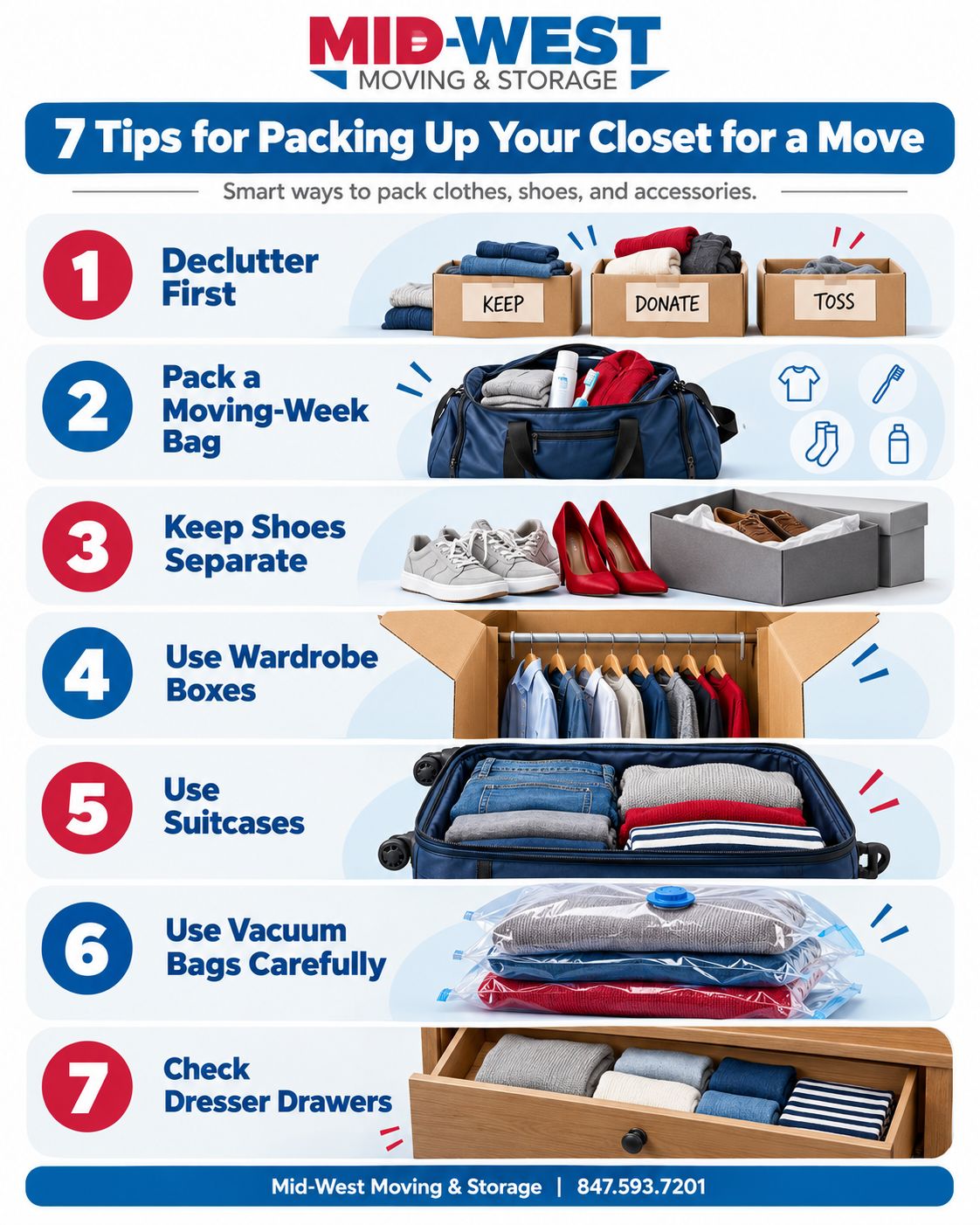
Here are seven practical ways to make packing your closet easier and keep your belongings organized from one home to the next.
1. Sort and Declutter Before You Pack
Before you start filling boxes, go through your closet and decide what is actually worth moving. Clothing that no longer fits, shoes you have not worn in years, and accessories you no longer use are only taking up space and adding to the amount you have to pack and carry. Moving is a good opportunity to donate, sell, or discard items you already know you will not use in your next home. It also helps to make sure everything you are keeping is clean and completely dry before it goes into a box. Damp or dirty clothing can develop odors during the move, especially if it remains packed for several days. Start with off-season clothing and items you rarely use so you can make progress without packing the things you still need every day. If you are trying to reduce how much you move, our guide to decluttering before moving is a good place to start.
2. Pack a Moving-Week Bag
One of the easiest mistakes to make is packing every piece of clothing and then realizing you need something before the move is over. Set aside a suitcase or duffel bag for the final few days in your current home and the first few days after you arrive. Pack everyday clothes, pajamas, underwear, socks, comfortable shoes, work clothes if needed, toiletries, medications, chargers, and anything else you would normally bring for a short trip.
Keep this bag with you instead of loading it deep into the moving truck. That way, you are not opening several boxes just to find a clean shirt or pair of socks on your first night. Mid-West’s guide to staying organized during a move also includes practical ideas for keeping important items together and easy to reach.
3. Keep Shoes Separate From Clothing
Shoes should usually be packed separately from clean clothing because even shoes that look clean can carry dirt, moisture, or dust on the soles. If you still have the original shoe boxes, they are useful because they help protect the shape of the shoes and keep pairs together. If not, wrap more delicate pairs individually with packing paper and place them in a sturdy box. Boots and dress shoes may benefit from clean packing paper placed inside to help them hold their shape during the move. Avoid putting too many heavy shoes in one large carton because the box can become difficult to lift and more likely to tear. For more detailed advice, see our guide to packing shoes for a move.
4. Use Wardrobe Boxes for Hanging Clothes
Wardrobe boxes can save a lot of time when you are moving suits, dresses, jackets, coats, dress shirts, and other clothing that you normally keep on hangers. These boxes have a built-in hanging bar, so clothes can be transferred directly from the closet rod into the box without being folded. This helps reduce wrinkles and also makes it easier to place the clothing directly into the new closet when you arrive. Try not to overload wardrobe boxes. They are large, and adding too much weight can make them difficult to handle. If there is extra space at the bottom, lightweight items such as pillows, soft accessories, or folded blankets may fit well without making the box too heavy.
5. Use Suitcases for Clothing and Soft Items
Suitcases are already designed to hold clothing, so there is no reason to move them empty. They work well for folded clothes, sweaters, pajamas, linens, towels, and other soft belongings. Rolling suitcases are particularly convenient because they can be moved around the home easily while you pack. It is best to avoid filling suitcases with very heavy items such as stacks of books. While that may seem like an efficient use of space, it can put too much strain on the wheels, handle, or zipper and make the suitcase difficult to lift. Keep the weight reasonable so the suitcase can still be handled safely.
6. Use Vacuum Bags Carefully
Vacuum storage bags can be helpful for bulky soft items such as winter coats, blankets, comforters, extra pillows, and some types of seasonal clothing. Compressing these items can free up a surprising amount of space in boxes or storage containers. However, vacuum bags are not the best choice for everything. Structured jackets, formalwear, delicate fabrics, and clothing that may lose its shape are usually better packed in wardrobe boxes or regular cartons. Make sure everything is completely dry before placing it into a sealed bag, and avoid leaving delicate clothing compressed for long periods if it could affect the fabric or shape.
7. Ask Before Leaving Clothes in Dresser Drawers
Whether clothing can stay inside a dresser during the move depends on the dresser, the weight of the contents, and how the furniture will be handled. Lightweight clothing may sometimes be left in sturdy drawers, but heavy items, valuables, breakables, and loose objects should be removed. A dresser that is already heavy can become much more difficult to move when every drawer is full. If you are unsure, ask your moving company what they recommend before moving day. If drawers need to be emptied, keeping clothing grouped by drawer can make it much easier to put everything back in the right place after the move.
How Should You Pack Jewelry and Small Accessories?
Jewelry, watches, belts, scarves, and other small accessories are easy to misplace during a move because they are small, lightweight, and often stored in several different places around the bedroom or closet. Before packing, gather everything together so you can see what you have and decide what should travel with you rather than on the moving truck.
- Necklaces and chains: Fasten each necklace before packing it and keep pieces separated to prevent tangling. Small zippered bags, jewelry organizers, or individual compartments work well.
- Earrings: Keep pairs together. Stud earrings can be secured through a small piece of card stock, while dangling earrings should be packed separately so hooks do not catch on other pieces.
- Rings and bracelets: Place them in small containers, jewelry boxes, or divided organizers instead of leaving them loose in a larger box.
- Watches: Wrap watches individually in soft packing material or a cloth to protect the face, band, and clasp from scratches.
- Valuable jewelry: Keep expensive, sentimental, or irreplaceable pieces with you rather than loading them onto the moving truck.
- Belts: Roll belts loosely instead of folding them sharply, especially leather belts, which can crease.
- Scarves and gloves: Fold or roll them and group similar items together so they are easy to find later.
- Hats: Structured hats should be packed in a box with enough room so they are not crushed. Add clean packing paper inside the hat to help it hold its shape.
- Handbags and purses: Empty them completely, remove anything that could leak, and lightly stuff structured bags with clean packing paper so they keep their shape.
- Label the box clearly: Use specific labels such as “Primary Bedroom – Jewelry & Accessories” instead of simply writing “Closet.”
- Take photos of valuable items: A quick photo before moving gives you a record of what you packed and what you kept with you.
How Should You Pack Handbags and Purses?
Handbags and purses can lose their shape or get scratched if they are packed too tightly. Before packing them, empty every pocket and remove receipts, coins, cosmetics, pens, food, and anything that could leak or stain the lining. For structured handbags, lightly fill the inside with clean packing paper, tissue paper, or another soft material so the bag keeps its shape during the move. Delicate bags can be placed inside dust covers or clean pillowcases for extra protection. Avoid stacking heavy boxes or shoes on top of them, and do not use newspaper directly against leather or light-colored fabric because the ink can transfer.
What Should You Do With Clothes You Are Donating?
Once you decide an item is not coming with you, move it out of the main packing area. Keep donation bags, items you plan to sell, and anything you are throwing away separate from boxes that are going on the moving truck. Label donation bags clearly and, if possible, drop them off before moving day. This reduces clutter and makes it less likely that a bag meant for donation gets loaded by mistake. It also means you are not paying to move items you already know you do not want in your new home.
Should You Use Cardboard Boxes or Plastic Bins for Clothes?
Both can work well, but they are useful in different situations. Cardboard moving boxes are usually the easiest choice for everyday clothing because they are lightweight, easy to label, and simple to stack in the moving truck. Plastic bins can be useful for seasonal clothing, items you already keep in storage, or clothing that will stay packed for a while after the move. Whichever option you choose, make sure the clothes are completely dry before packing them. Moisture trapped inside a closed box or bin can lead to odors or mildew. Avoid overfilling containers too. Clothes packed too tightly can become badly wrinkled, while an overloaded box may be difficult to lift safely.
How Should You Label Closet Boxes?
Good labels can save a lot of time when you start unpacking. Instead of writing only “Bedroom,” be specific about what is inside and where it belongs. Labels such as “Primary Bedroom – Winter Clothes,” “Closet – Shoes,” or “Kids’ Room – Summer Clothes” make it much easier to put boxes in the right room. If a box contains clothing or accessories you will need right away, add “Open First.” It is also helpful to label at least two sides of the box so the description is still visible when boxes are stacked.
What Should Stay With You During the Move?
Some items are better kept with you instead of being packed with the rest of your household belongings. Valuable jewelry, important documents, medications, keys, wallets, purses, sentimental items, and anything you will need immediately should stay in your personal vehicle or travel bag. The same applies to work uniforms, formalwear, or clothing needed soon after the move. Keeping these items with you makes them easier to access and reduces the chance of something important being misplaced among dozens of moving boxes.
Common Closet Packing Mistakes to Avoid
Avoid these common mistakes when packing your closet for a move:
- Packing dirty or damp clothing: Make sure clothes are clean and completely dry before putting them into boxes or bins.
- Packing shoes with clean clothes: Keep shoes separate so dirt and odors do not transfer to clothing.
- Overloading boxes: Large boxes filled with heavy clothing, shoes, or accessories can become difficult to lift and may tear.
- Packing valuables with everyday items: Keep jewelry, important documents, and sentimental items with you during the move.
- Skipping the decluttering step: Do not spend time and money moving clothes or accessories you already know you no longer want.
- Removing every item from its hanger: Wardrobe boxes can save time and help reduce wrinkles for dresses, suits, jackets, and other hanging clothes.
- Using vague labels: Write exactly what is inside each box, such as “Primary Bedroom – Winter Clothes” instead of just “Bedroom.”
- Waiting until the last minute: Start with off-season clothing and rarely used items so the closet does not become a rushed job right before moving day.
- Packing boxes too tightly: Clothes can become badly wrinkled or damaged when they are compressed into an overfilled box.
- Forgetting an essentials bag: Keep a few days of clothing, toiletries, medications, and other necessities separate so you do not have to unpack several boxes right away.
When Should You Start Packing Your Closet?
You do not need to empty your closet months before your move. Start with clothing and accessories you rarely use and work toward your everyday wardrobe as moving day approaches. Several weeks before the move, you can usually pack off-season clothing, extra shoes, formalwear, spare linens, and accessories. During the final week, pack everything except the clothing you plan to wear before and immediately after the move. If you are preparing the rest of your home at the same time, use our moving checklist to stay on track.
Need Help Packing Your Home?
Closets are only one part of the packing process. Kitchens have dishes and appliances, bedrooms have furniture and linens, and living areas may include artwork, electronics, décor, and other belongings that need different types of protection. Mid-West Moving & Storage offers professional packing services for customers who want help with some or all of the packing. We can pack an entire home or focus on the rooms and belongings that take the most time or require extra care. Mid-West Moving & Storage has been helping families and businesses move since 1983, with trained crews handling residential, commercial, local, and long-distance moves throughout Chicagoland.
Get a Free Moving Estimate
Planning a move in Elk Grove Village, Chicago, or the surrounding suburbs? Call Mid-West Moving & Storage at 847.593.7201 or request a free estimate online. Let us know where you are moving, when you plan to move, and whether you need help with packing, storage, or specialty items.
FAQs
How Do You Pack Clothes for Moving Without Hangers?
Clothes that are not staying on hangers can be folded and packed in medium-size moving boxes, suitcases, plastic bins, or vacuum storage bags when appropriate. Keep similar items together, such as shirts, pants, sweaters, and seasonal clothing, so unpacking is easier. Avoid overfilling boxes because tightly packed clothing can become badly wrinkled and boxes that are too heavy are harder to move safely. Delicate garments should be wrapped or placed in a separate container rather than packed underneath heavier clothing.
How Do You Pack Clothes for a Long-Distance Move?
For a long-distance move, make sure clothing is clean and completely dry before packing it. Use sturdy boxes, suitcases, wardrobe boxes, or sealed bins depending on the type of clothing. Hanging garments such as suits, dresses, and coats are usually best packed in wardrobe boxes, while folded clothes can go into regular moving boxes or suitcases. Keep valuable clothing, important uniforms, and anything you will need immediately with you. It is also a good idea to label boxes by room and clothing type so they are easier to locate when your shipment arrives.
How Do You Pack Clothes for Moving on Hangers?
Wardrobe boxes are one of the easiest ways to move clothes while keeping them on hangers. These boxes include a hanging bar, allowing you to transfer clothing directly from the closet into the box. This works well for dresses, suits, jackets, coats, and other garments that wrinkle easily. Avoid overloading the box, and keep the bottom limited to lightweight items so the carton remains easy to handle.
What Is the Best Way to Pack Clothes for Moving in a Suitcase?
Suitcases work well for folded clothing, pajamas, sweaters, underwear, socks, and other soft items. Pack heavier clothing toward the bottom and lighter items on top, but keep the overall weight manageable so the suitcase is still easy to lift and roll. Rolling some clothes can help save space, while folding is often better for structured garments. A suitcase can also double as your moving-week bag if you keep a few days of clothing and essentials with you instead of loading it onto the moving truck.
Should You Fold or Roll Clothes When Moving?
Both methods can work. Folding is usually better for jeans, sweaters, dress shirts, and clothing that needs to hold its shape, while rolling can save space for T-shirts, pajamas, leggings, and other casual clothing. Avoid tightly rolling delicate or structured garments because it can create deep wrinkles. For clothing that normally stays on hangers, a wardrobe box is often a better choice than either folding or rolling.
Can You Leave Clothes on Hangers When Moving?
Yes. Clothes can stay on hangers if you use wardrobe boxes or another method that keeps the garments supported and protected. Wardrobe boxes are usually the safest option because they keep clothing upright and reduce wrinkling. Simply grouping hanging clothes together in loose bags may be quicker, but it does not offer as much protection during a move.
What Is the Best Way to Pack Clothes Without Wardrobe Boxes?
If you do not have wardrobe boxes, fold clothing into medium-size moving boxes, pack it in suitcases, or use clean plastic bins. Hanging clothes can be removed from the hangers and folded carefully, or grouped together in garment bags if you already have them. Keep delicate clothing separate from shoes and heavy items, and label each container so you know which closet or bedroom it belongs in.
How Do You Keep Clothes From Getting Wrinkled During a Move?
Use wardrobe boxes for dresses, suits, coats, and other hanging garments whenever possible. Fold other clothing neatly and avoid stuffing too much into one box. Heavy items should not be placed on top of delicate garments. Packing clothing loosely enough to hold its shape and unpacking it soon after the move can also help reduce wrinkles.
Should Clothes Go in Boxes or Bags When Moving?
Boxes are generally the better choice for most clothing because they stack well, protect the contents, and are easier to label. Suitcases and plastic bins are also useful. Soft bags can work for lightweight clothing, but they offer less protection and can be harder to stack in a moving truck. Avoid using thin bags for items that could be damaged, crushed, or exposed to moisture.
How Many Boxes Do You Need for Clothes When Moving?
The number of boxes depends on how much clothing you own and the type of boxes you use. Wardrobe boxes hold hanging garments, while medium-size boxes work well for folded clothes. Instead of trying to estimate based only on closet size, sort and declutter first, then pack by category. This gives you a better idea of how many boxes you actually need and prevents you from moving clothes you no longer want.

Senior Move Consultant | Mid-West Moving & Storage
Michael Tae is a Senior Move Consultant at Mid-West Moving & Storage, bringing over 20 years of experience in the moving industry, specializing in residential and commercial moving solutions. Since joining Mid-West Moving & Storage in 2019, Michael has helped countless clients navigate their moves with confidence by providing expert guidance, personalized planning, and a customer-first approach.
As a leader of the inside sales team, Michael works closely with homeowners, businesses, and families to ensure every move is organized, efficient, and stress-free. His calm communication style and industry knowledge help clients make informed decisions throughout the moving process.
A lifelong Chicago native, Michael understands the unique needs of individuals and businesses moving throughout the Chicagoland area. Outside of work, he enjoys spending time with his wife and two children.
Michael shares his moving expertise through Mid-West Moving & Storage’s blog, providing helpful insights on residential moving, commercial relocations, senior moves, packing tips, and planning a successful move.